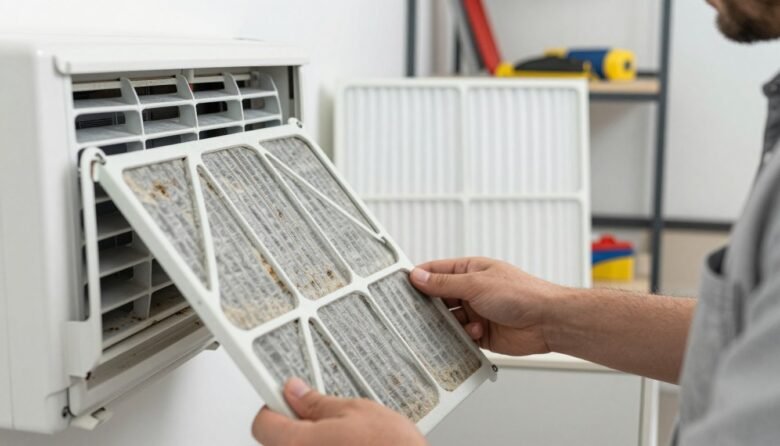
Indoor air can be 2–5 times more polluted than outside air, according to the EPA. That makes simple upkeep worth your time. A clean air filter keeps dust and particles from harming your furnace and other parts of your system.
Changing the air filter is easier than many people think. Most homeowners can swap a standard unit in minutes and protect airflow, energy use, and overall efficiency.
Look at the dimensions printed on the frame before you buy a new one. Picking the correct size and a proper MERV rating helps filtration and keeps your system running smoothly.
Companies like Filterbuy, an American-owned brand with over 75,000 five-star reviews, make it simple to get high-quality products. Regular care prevents buildup that leads to higher bills and possible malfunctions.
Why Regular HVAC Filter Replacement Matters
Small maintenance habits deliver big savings on home comfort and utility costs. Regular care keeps airflow steady, reduces strain on the furnace or air conditioner, and helps your system run efficiently.
Energy Efficiency Benefits
According to the Department of Energy, timely changes can cut energy use by 5–15%. That translates to lower energy bills and less wear on your unit.
- Cleaner components use less energy to heat or cool your home.
- Reduced strain helps avoid costly breakdowns to the system.
- Better efficiency extends the life of a furnace and air conditioner.
Improving Indoor Air Quality
Air filters trap dust, pollen, pet dander, mold spores, and other airborne particles. That filtration improves indoor air and helps protect family members who spend most of their time at home.
Keeping these parts clean is the simplest way to maintain good air quality and comfort without expensive repairs.
Understanding MERV Ratings and Filter Types
Choosing the right MERV score can change how well your home breathes. The MERV scale stands for minimum efficiency reporting value and rates how well an air filter captures particles.
Decoding MERV Efficiency
A MERV rating shows a filter’s ability to trap dust, pet dander, and other airborne particles. Higher numbers mean finer capture, but very high ratings can reduce airflow in some systems.
Pleated Versus Fiberglass Options
Pleated filters increase surface area and often score between 7 and 13 on the merv rating scale. Fiberglass types are less dense and usually offer lower filtration efficiency.
Benefits of Electrostatic Technology
Electrostatic filters use static charge to grab more particles. They commonly rate between 10 and 16 and can improve indoor air quality without harming system performance.
- MERV = minimum efficiency reporting value for every air filter.
- HEPA (dense fiberglass mats) ranks highest, often MERV 17–20.
- Filterbuy pleated air filters add electrostatic capture for extra dust and pet dander protection.
How to Determine the Correct Filter Size
Start by measuring the slot or frame where the air filter sits. Use a tape measure and record length, width, and depth in inches. This gives the actual size you need.
Remember that the nominal size printed on many products is rounded up to the nearest inch. If your measured depth is 1.5 inches, the label may read 2 inches. That is a common industry practice for hvac system parts.
Most standard panels are 1–2 inches thick. Media types for a furnace often run 3–5 inches. Choosing the wrong size can leave gaps, reduce filtration effectiveness, and hurt system airflow.
- Measure length, width, and depth from the frame, not the old product label.
- Check your furnace owner’s manual and online size charts to confirm the correct match.
- Verify new items against manufacturer dimensions to avoid airflow restrictions and protect energy efficiency.
Proper sizing also helps maintain the minimum efficiency reporting value and preserves indoor air quality. When in doubt, double-check measurements before purchase.
Essential Tools and Safety Preparation
Before you touch any panels, make sure the system is powered off to keep dust from spreading. Gather a screwdriver, clean cloth, and a vacuum with a brush attachment. Have the correct air filter size and a replacement filter on hand so the job goes quickly.
Locating Your Filter Compartment
The air filter usually sits near the return duct or inside the blower compartment of a furnace or air handler unit. On some units the slot is behind a panel; on others you may need to unclip latches.
Open the panel carefully—you might need to loosen screws. Clean any dust or loose particles from the frame and compartment before inserting new air filters. Check the merv rating to ensure it suits your hvac system and home needs.
- Turn the system off to avoid unfiltered air circulation.
- Locate the slot near the return duct or blower compartment.
- Open the panel, clean the area, and confirm correct size and merv.
- Secure the compartment after installing the new unit to maintain airflow and efficiency.
Step by Step Guide to HVAC Filter Replacement
Spend ten minutes now to save energy and keep your home air clean.
First, turn off the system so dust does not spread and you remain safe. Locate the slot on your furnace between the plenum and the unit. Remove the old filter carefully and note the frame size.
- Align the airflow arrows on the new filter with the direction toward the blower or furnace.
- For accordion-style units, attach the new piece to the frame before returning it to the slot.
- Vacuum the slot to remove dust and airborne particles that can harm performance.
- Secure the panel, turn the system on, and check for improved airflow and quieter operation.
- Set a reminder to change the filter every 90 days to improve indoor air quality and keep the system running efficiently.
- Confirm size and frame fit before installing the new item.
- Small, regular swaps protect energy use and extend unit life.
- Noticing reduced airflow earlier can signal an overdue check.
Maintaining Your System for Longevity
A few simple checks each season can add years to your system’s life.
Cleaning Washable Filters
Start by vacuuming both sides with a brush attachment to remove loose dust and large particles. Then wash using mild soap and warm water, rinsing until the water runs clear.
Allow the air filter to dry completely before reinstalling; moisture invites mold and harms performance. With monthly cleaning, washable units can last several years, but follow the manufacturer’s guidance for eventual replacement.
Inspecting Ductwork Seals
Check duct joints, seams, and corners for gaps that let contaminants in and reduce airflow. Small leaks force the furnace and AC to work harder and raise energy bills.
Seal visible gaps with foil tape or mastic and re-check after a run cycle. Regular inspections and keeping the MERV rating current help preserve air quality and system efficiency.
- Vacuum and wash washable filters monthly; air dry fully before reuse.
- Seal duct gaps to prevent dust and particles from entering the system.
- Track filter condition and schedule a timely replacement based on use and manufacturer notes.
Common Signs Your Filter Needs Attention
Watch for rising dust on surfaces and vents — it’s often the first sign your air filter needs care.
If rooms cool or heat unevenly, or the furnace runs longer than usual, reduced airflow may be the cause. That lost circulation also raises energy bills and strains the hvac system.
Listen for new humming, rattling, or louder operation. Those noises usually mean the system works harder to move air through a clogged barrier.
A musty or stale smell when the system runs can indicate damp debris and bacteria trapped inside. Check for heavy dust buildup and visible dirt on the media.
- Visible dust, poor performance, or higher energy bills.
- Odd noises, stale smells, reduced airflow, and uneven temperatures.
- More household dust, trouble with the air conditioner, or high pet dander levels suggest a higher merv rating may help.
- Address these signs early to protect the system and keep indoor air quality high.
Conclusion
A quick seasonal check protects indoor air and keeps your family breathing easier. Regular care is the simplest way to improve indoor air quality and reduce dust and particles in your home.
Pick the correct size and MERV for your furnace so the air filter fits well and the hvac system runs efficiently. Change or schedule filter replacement about every 90 days, and use trusted brands like Filterbuy for reliable performance.
Consistent upkeep lowers energy bills, prevents costly repairs, and keeps air quality high. Make a short reminder today — small steps now protect comfort and savings for years to come.

Ava Harrington is a home improvement writer and DIY enthusiast with over eight years of hands-on experience maintaining, renovating, and documenting residential properties across the United States. She writes practical, no-fluff guides on home care, preventive maintenance, and everyday repairs — helping homeowners protect their properties without overspending or overcompleting.