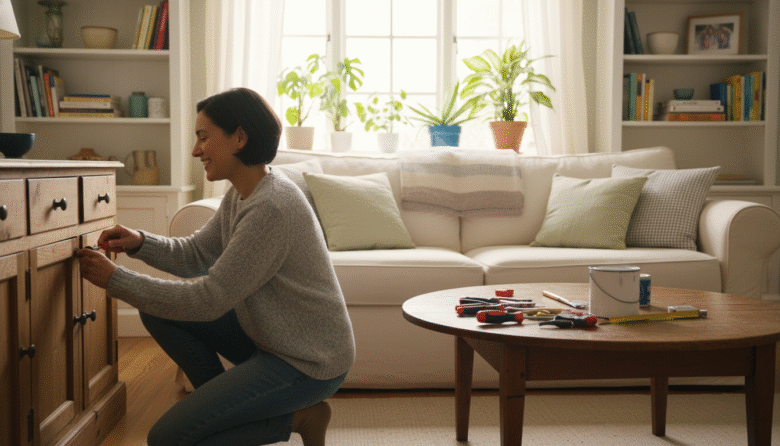
Home maintenance doesn’t have to mean weekends on a ladder or an annual to-do list that keeps getting pushed to next month. The most effective home protection happens in small, unremarkable moments — taking off your shoes at the door, wiping down the stovetop after dinner, running a squeegee across the shower wall before you step out. These aren’t dramatic interventions. They’re habits that compound over years into dramatically lower repair bills and a home that holds its condition.
This article covers eight practical habit categories that directly prevent household damage. Each one is grounded in how damage actually occurs — so you understand not just what to do, but why it works.
The Shoes-Off Policy
The average pair of shoes tracks in an astonishing amount of abrasive material: fine sand, grit, salt residue in winter, trace amounts of motor oil, pesticide residue from lawns, and general outdoor debris. Every step on a finished floor grinds these particles against the protective finish layer. On hardwood floors, this is the primary cause of the dull, scratched appearance that develops in heavily trafficked homes within a few years of installation. On tile, it grinds against grout. On luxury vinyl plank, it creates micro-scratches that trap dirt and become visible over time.
A shoes-off policy at the entry is the simplest, highest-impact floor protection habit you can adopt. Studies of floor finish wear consistently show that homes with shoes-off policies maintain their finish two to three times longer than homes where shoes are worn throughout.
How to Implement It
The policy only holds if it’s easy to follow. Place a quality doormat both outside and inside the entry — the exterior mat captures the bulk of debris, and the interior mat catches what remains. Look for exterior mats with stiff bristles (coir or rubber-backed scraper mats) that physically remove material from shoe soles. Interior mats should be absorbent for wet-weather days.
Add a shoe rack, a basket, or dedicated cubbies near the entry so there’s a clear place for shoes. If the entry is too tight, a low bench with under-bench storage accomplishes the same thing. Provide guest slippers if you want people to feel welcome while keeping the policy consistent.
Vacuum or sweep hard floors at least twice a week in households with regular foot traffic. The goal is to remove abrasive grit before it has time to work into the surface. A robot vacuum on a daily schedule handles this automatically in most households for under $250 (brands like Eufy, Roomba, and Shark all offer reliable entry-level models).
Kitchen Habits That Protect Surfaces and Appliances
The kitchen is one of the two rooms in a home (the bathroom is the other) where daily habits have the largest impact on long-term condition. The combination of heat, moisture, grease, and water creates an environment where small neglected moments turn into expensive repairs.
Wipe the Stovetop After Every Use
Cooking residue — grease splatter, spilled sauce, boil-overs — is far easier to clean when it’s still warm and soft than when it has been baked on through successive cooking sessions. On glass-ceramic cooktops, burned-on residue requires aggressive scraping that risks scratching the surface. On gas ranges, it clogs burner ports and prevents ignitors from working cleanly, eventually requiring disassembly and professional cleaning.
A 30-second wipe with a damp cloth after each use prevents virtually all of this. For glass-top ranges, use a cooktop cleaner like Cerama Bryte or Weiman weekly to maintain the surface finish and prevent micro-abrasion from utensils.
Run the Range Exhaust Fan During and After Cooking
Cooking releases vaporized grease that coats every surface in the kitchen over time — cabinet faces, the inside of the exhaust hood, walls near the range, and the ceiling. This grease film attracts and holds dust, becomes sticky and difficult to remove, and on painted surfaces, causes paint to fail prematurely.
Running the exhaust fan captures grease before it disperses. If your range hood exhausts to the outside, it also removes moisture and combustion gases from gas cooking. If it’s a recirculating type with filters, clean or replace the filters every 1–3 months depending on cooking frequency — clogged filters render the fan nearly useless.
Keep the Sink Basin Dry After Use
Standing water in a stainless steel sink leaves mineral deposits and can cause corrosion at scratch points over time. In a porcelain or composite sink, standing water softens any residue from dishes and allows bacteria to establish. More importantly, moisture that accumulates around the sink perimeter — between the sink and the countertop — wicks under the countertop surface, particularly on laminate countertops, and causes swelling, delamination, and mold growth in the substrate.
A 10-second wipe of the sink basin and the surrounding countertop edge after washing dishes eliminates this entirely. Check annually that the caulk bead where the sink meets the countertop is intact and not cracked or pulling away. Re-caulk as needed — it takes 20 minutes and costs under $5.
Bathroom Habits That Prevent Moisture Damage
Bathrooms concentrate moisture in a small space multiple times a day. Without consistent habits to manage that moisture, the result is mold on grout, peeling paint on walls and ceilings, rot in the subfloor around the tub and toilet, and deteriorating caulk seals that allow water to reach the framing behind the tile.
Squeegee After Every Shower
Water left standing on shower walls evaporates slowly, depositing minerals and feeding mold in grout lines. A 20-second pass with a shower squeegee (hang it inside the shower enclosure for convenience — Simplehuman and OXO both make reliable wall-mount versions for under $20) removes 70–80% of the surface water before it has a chance to cause damage.
This single habit dramatically extends the time between necessary grout cleaning and resealing and reduces soap scum buildup on glass enclosures. It also reduces the moisture load the exhaust fan has to manage.
Run the Bathroom Fan for 20 Minutes After Showering
Most homeowners turn off the bathroom fan when they leave the room, but the steam generated by a hot shower continues to condense on cooler surfaces for 15–20 minutes after the water stops. Running the fan through this cooling period removes the moisture before it can saturate drywall or ceiling paint.
A simple fix: plug your bathroom fan into a timer switch (Leviton and Honeywell both make in-wall countdown timer switches for $20–$30) and set it for 20 minutes. Hit the switch when you turn off the shower and the fan handles the rest automatically. This is particularly important in bathrooms with painted drywall ceilings — persistent moisture causes paint to bubble and peel and eventually saturates the drywall itself, requiring full ceiling replacement.
Clean the Drain Hair Trap Monthly
A $2 silicone drain hair catcher (TubShroom is a popular brand, but any silicone insert that fits your drain works) prevents hair and soap scum from building up inside the drain pipe. Hair accumulation in the pipe creates a surface that soap residue and mineral deposits cling to, progressively reducing flow and eventually causing a full blockage.
A slow or blocked shower drain forces a plumber call. Depending on your area, a drain cleaning service costs $150–$300 for a simple clog and up to $500 if the blockage requires auger work or partial disassembly. Cleaning a drain hair trap takes 30 seconds. This is exactly the kind of compounding math that defines smart home maintenance: a $2 investment and 30 seconds of monthly attention prevents a $200+ repair call.
Managing Indoor Humidity Day to Day
Target indoor relative humidity between 40% and 50% year-round. Below 35%, wood floors and furniture shrink and crack, static electricity becomes a nuisance, and skin and respiratory passages dry out. Above 55%, wood swells, mold risk increases significantly, and dust mite populations explode.
On mild days — spring mornings, fall afternoons when outdoor humidity is in range — open windows on opposite sides of the home to create cross-ventilation. This flushes out stale humid air and replaces it with drier outdoor air for free, without running the air conditioner or dehumidifier. A $15 digital indoor/outdoor thermometer-hygrometer (like the AcuRite 01083M or the Govee H5075) tells you both indoor and outdoor humidity levels so you know when opening windows helps vs. when it makes things worse.
Signs you’re consistently above 50% RH: condensation on windows in the morning, musty odors in closets or corners, visible mold on grout or caulk, doors that stick in summer. Signs you’re consistently below 35% RH: gaps appearing between hardwood floor planks, static shocks when touching metal surfaces, cracking in painted wood trim.
Pet-Specific Protection Habits
Pets introduce specific and predictable damage patterns. Dog nails on hardwood floors function like sandpaper on the finish with every step — nails that are too long create audible clicking and visible scratching. Cat claws on upholstered furniture shred fabric. Pet dander and hair accumulate in HVAC filters, reducing airflow and efficiency. Dog doors, if not maintained, create drafts and moisture infiltration points.
Trimming Pet Nails
Keep dog nails trimmed short enough that they don’t touch the floor when the dog is standing. A general rule: if you can hear clicking on a hard floor, the nails are too long. Monthly nail trims — done at home with a guillotine-style trimmer and styptic powder for safety, or at a groomer — eliminate nail-related floor damage entirely.
Furniture Covers and Designated Pet Zones
If cats or dogs share furniture, furniture covers or washable slipcovers protect upholstery from pet hair, oils, and claw damage. Covers designed for pet use (brands like Gorilla Grip and Sofa Shield make waterproof options) are far cheaper to replace than reupholstering a sofa. A single reupholstery job on a standard sofa runs $800–$1,500.
Pet Door Maintenance
Inspect pet door flaps twice a year. The flexible flap seals against a frame to prevent drafts and moisture infiltration; worn, cracked, or stiff flaps allow outside air, rain, and pests to enter. Replacement flaps for most dog door brands cost $15–$40 and install in minutes.
Smart Furniture Placement
Where you place furniture affects how your home ages in ways that aren’t immediately obvious.
Keep furniture at least 2 inches away from exterior walls, particularly on below-grade or poorly insulated walls. Exterior walls in cold climates are cooler than interior walls, especially in corners. When warm interior air contacts a cold wall surface behind a piece of furniture, it can reach the dew point and condense — creating hidden moisture on the wall surface that promotes mold growth. This is why mold often appears first in bedroom closet corners and behind dressers on exterior walls, not in the shower.
Keep furniture and rugs at least 12 inches away from HVAC supply and return vents. Blocking vents restricts airflow to that zone, causes the system to work harder, and can create pressure imbalances that force the system to short-cycle. It also means that portion of the room is chronically under- or over-conditioned, which affects both comfort and the humidity balance in that space.
Don’t place houseplants directly on wood floors or wood furniture without a waterproof saucer underneath. Overwatering is common, and water that escapes through drainage holes or condenses on the outside of a cool pot soaks into wood surfaces and causes staining and swelling that is difficult to reverse.
The Weekly 10-Minute Walk-Through
Once a week, spend 10 minutes on a quick check of the home’s most vulnerable points. This isn’t a deep inspection — it’s a quick visual scan designed to catch small problems before they become large ones. The goal is pattern recognition: something that looks different from last week is worth investigating.
What to Check
- Under kitchen and bathroom sinks: Open the cabinet and look for moisture on the cabinet floor, discoloration of the wood, or white mineral staining on the supply lines. Any sign of moisture means a drip is present somewhere — find it and fix it immediately. A slow drip under a sink can saturate a particleboard cabinet floor within a few weeks, requiring a full cabinet replacement.
- Window sills: Check for moisture accumulation, soft spots in the paint, or peeling. These are signs of condensation or a failing window seal. On double-pane windows, a fogged appearance between the panes means the seal has failed and the insulating gas has escaped — the window is no longer performing at its rated efficiency.
- Door seals and weatherstripping: Run your hand along the bottom edge of exterior doors. Feel for drafts. Look at the weatherstripping for compression set (the material has flattened and no longer springs back). Replacing door weatherstripping costs $15–$30 in materials and 20 minutes per door.
- Bathroom caulk lines: Look at the caulk where the tub or shower meets the wall and floor. Any cracking, separation, or discoloration (black staining is mold, pink is bacteria) means it’s time to regrout or recaulk that joint. Water that enters behind a failed caulk line reaches the subfloor and framing within weeks.
How These Habits Compound Over Time
The economic case for daily home habits is built on compounding prevention. Small, regular actions make expensive interventions unnecessary. The math is asymmetric: the cost of the habit is almost always trivial, while the cost of the problem it prevents is almost always significant.
Consider these specific examples:
- A $2 silicone drain hair trap cleaned monthly prevents a $150–$300 drain cleaning service call. Over 10 years, that’s $0 vs. potentially $1,500 in plumber visits.
- A shoes-off policy and twice-weekly vacuuming can extend the life of a hardwood floor finish from 4 years to 8–10 years. A screen-and-recoat at 8 years costs $1–$2 per square foot. Waiting until the floor needs a full sand-and-refinish at year 4 costs $3–$8 per square foot. On a 1,000 square foot floor, that’s $1,000–$2,000 vs. $3,000–$8,000.
- Running the bathroom exhaust fan for 20 minutes after showers for 10 years costs roughly $10–$15 in extra electricity. Replacing a bathroom ceiling that has been damaged by persistent moisture — new drywall, skim coat, prime, and paint — costs $400–$800.
- Keeping washing machine supply hoses replaced on a 5-year schedule costs $20–$30 per replacement. A burst washing machine hose while the homeowners are at work can flood an entire floor, causing $10,000–$30,000 in water damage — frequently the single most expensive insurance claim homeowners make.
- Monthly kitchen exhaust fan filter cleaning (or quarterly replacement) costs nothing (wipe with degreaser) or $15–$30 per year in filters. Replacing a range hood with grease-clogged motors costs $200–$800 for a basic unit plus installation.
None of these habits require specialized skills, expensive tools, or significant time. They require only that you build the habit and execute it consistently. Over a 10- or 20-year ownership period, homeowners with these habits in place typically spend 30–50% less on reactive repairs than those without them — because the problems that require emergency intervention simply don’t develop.
A home that is consistently maintained at the small scale rarely requires large-scale repair. The compound effect of daily and weekly habits is the most underestimated force in residential homeownership.
Summary: Your Daily and Weekly Habit Checklist
- Daily: Wipe stovetop after cooking, run range exhaust fan during and after cooking, squeegee shower walls, run bathroom fan 20 minutes after showering, wipe sink basin dry
- Weekly: Vacuum or sweep hard floors, 10-minute walk-through (under sinks, window sills, door seals, caulk lines), empty and wipe kitchen exhaust filter if needed
- Monthly: Clean drain hair trap, check indoor humidity reading against 40–50% RH target, inspect pet door flap
- Seasonally: Check weatherstripping, inspect caulk at tub/shower/windows, replace HVAC filter, trim pet nails if not done more frequently

Ava Harrington is a home improvement writer and DIY enthusiast with over eight years of hands-on experience maintaining, renovating, and documenting residential properties across the United States. She writes practical, no-fluff guides on home care, preventive maintenance, and everyday repairs — helping homeowners protect their properties without overspending or overcompleting.