Many homeowners focus on cosmetic updates that look impressive but lack lasting value. The most valuable upgrades prioritize safety, accessibility, and durability. These changes support independent living as people age in their current residences.
Recent data reveals a strong preference for aging in place. A 2024 U.S. News study shows 94% of older Americans want to stay in their homes. The U.S. Census Bureau projects the 65+ population will grow by nearly 30% over 25 years. Senior Housing News reports limited new construction for senior living facilities.
This demographic shift creates urgent demand for housing adaptations. Functional improvements serve multiple generations and life circumstances. They provide lasting benefits beyond temporary visual appeal.
Investing in these upgrades helps people maintain independence and community connections. They avoid the emotional and financial costs of relocating. This approach creates spaces that support quality living through all stages of life.
Key Takeaways
- Most older Americans prefer to age in their current homes rather than move
- The aging population is growing faster than age-appropriate housing development
- Improvements focused on safety and accessibility provide more lasting value than cosmetic updates
- These adaptations benefit people across different life stages and circumstances
- Aging in place helps maintain independence and community connections
- Functional home upgrades can reduce relocation costs and emotional stress
- Long-term planning creates living spaces that support changing needs over time
Understanding the Importance of Practical Home Improvements for Longevity
The true foundation of a secure living environment lies in anticipating future physical needs. Focusing on function over fashion creates spaces that support well-being for years.
Falls are the top cause of injury for older adults. A lack of safety features can force a recovery stay in a facility. This disrupts independence and daily life.
Planning ahead allows for thoughtful, cost-effective choices. You avoid rushed decisions during a health crisis. This approach saves money and reduces stress.
These modifications directly boost daily comfort and lower risks. They create an environment that adapts to changing needs over time. This supports independent living.
Homes designed with the future in mind provide peace of mind for residents and families. They know the space can evolve without requiring a move.
This strategic planning also adds genuine value to a property. It makes the residence suitable for a wider range of buyers seeking accessible living.
Planning an Aging-Friendly Remodeling Project
The journey toward an accessible residence starts with thoughtful assessment and expert consultation to identify necessary modifications. Homeowners benefit from a systematic approach that considers both immediate and future requirements.
Assessing Your Home’s Current Layout and Needs
Begin by evaluating daily movement patterns throughout your living spaces. Identify potential obstacles and safety concerns in high-traffic areas. This evaluation helps prioritize which modifications matter most.
Consider how your needs may evolve over time. Focus on critical areas first while planning secondary updates for later. This strategic approach allows for better budget management.
Consulting with a Certified Aging-in-Place Specialist
CAPS professionals bring specialized training in accessible design. They understand how to create safe environments for people with varying abilities. Visit nahb.org/CAPS to find certified experts in your area.
These specialists identify safety concerns homeowners might overlook. Their expertise ensures remodeling decisions support long-term independence. Family members and caregivers should join these discussions.
Projects can follow different pacing options. Some homeowners choose comprehensive renovations. Others prefer phased improvements that address critical areas first.
Enhancing Bathroom Safety and Accessibility
Bathrooms present some of the greatest safety challenges in any residence, making them a critical focus for accessibility upgrades. These spaces combine water, hard surfaces, and confined areas that increase fall risks.
Comprehensive bathroom remodeling can cost up to $40,750 according to recent data, but delivers a 49% return on investment. This investment creates lasting value while addressing immediate safety concerns.
Installing Grab Bars and Secure Wall Blocking
Proper grab bar installation requires secure anchoring behind walls. Wooden blocking installed during construction provides solid support points.
Document blocking locations with photos and measurements before drywall installation. This prevents costly guesswork later. Grab bars benefit people of all ages, especially during recovery periods.
Implementing Zero-Step Showers and Curbless Entries
Traditional bathtubs pose significant entry challenges. Zero-step showers eliminate dangerous curbs that can cause trips and falls.
These showers accommodate wheelchairs and walkers while maintaining attractive aesthetics. Frameless glass enclosures create a modern look with full accessibility.
Key features include adjustable showerheads, fold-out seats, and non-slip flooring. Comfort-height toilets and wider doorways complete the accessible bathroom design.
Upgrading the Kitchen for Multi-Generational Living
Multi-generational living demands kitchen spaces that work equally well for children, adults, and seniors. This central gathering area requires design thinking that supports varying heights, abilities, and mobility levels. According to Fixr.com, renovations for aging in place range from $8,000 to $50,000 depending on scope.
These investments create a functional environment where everyone can participate safely. The kitchen becomes a welcoming space for all family members.
Adjusting Countertops and Appliance Heights for Ease of Use
Installing countertops at multiple heights addresses different user needs. Varied levels accommodate children, tall individuals, and those who prefer sitting while preparing meals. This approach ensures the kitchen remains usable as physical capabilities change.
Appliance placement significantly impacts safety and accessibility. Choose cooktops with front controls to avoid reaching over hot burners. Position microwaves at comfortable heights rather than above ranges. These simple adjustments prevent common kitchen hazards.
Incorporating Pull-Out Drawers and Accessible Storage Solutions
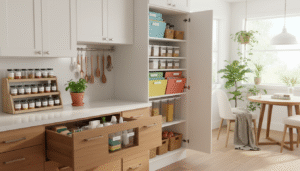
Storage modifications eliminate excessive bending and reaching. Pull-out drawers and sliding trays make items easily accessible. People with limited upper body strength benefit from these intelligent solutions.
Consider adding a secondary prep sink near cooking areas. Pullout spray faucets reduce the need to carry heavy pots. Lever-style handles and shallow sinks further enhance accessibility throughout the kitchen space.
These thoughtful upgrades create a kitchen that serves everyone comfortably. They support independent meal preparation while reducing physical strain. The result is a welcoming environment that adapts to changing needs over time.
Improving Staircase Safety and Entryway Accessibility
Strategic modifications to staircases and entryways can dramatically improve safety and accessibility. These changes support people with varying mobility levels, from temporary injuries to permanent assistive device users.
Utilizing Wider Staircases and Double Handrails
Double handrails on both sides provide essential support for people with strength imbalances. This configuration offers stability regardless of which hand someone prefers to use.
Opt for 42-inch wide staircases instead of standard 36-inch designs. The extra space accommodates two people walking side-by-side and facilitates furniture moving. Wider dimensions also allow for future lift installation if mobility needs change.
Deeper treads and shorter risers make stairs significantly safer. Even modest dimensional changes help people with limited mobility, balance issues, or reduced leg strength.
Install electrical outlets at staircase landings to support future lift chair installations. This prevents hazardous extension cords while providing convenient power access for cleaning tasks.
Zero-step entries eliminate stairs at main entrances. These accessible pathways work for wheelchair users, people with walkers, and anyone transporting heavy items.
Complementary features include motion-activated lighting and non-slip flooring. Ramps and stair lift planning further enhance safety in these critical areas.
Smart Home and Lighting Upgrades for Enhanced Safety
Lighting represents one of the most impactful yet often overlooked aspects of home safety and accessibility. Proper illumination prevents accidents and supports independence for residents with changing vision needs.
Installing abundant lighting during renovations proves more cost-effective than correcting dark areas later. Include dimmers for adjustable brightness throughout different times of day.
Installing LED Lighting, Dimmers, and Motion Sensors
LED technology provides superior illumination without overloading electrical circuits. These energy-efficient lights offer excellent dimming capabilities and help older residents see more clearly.
Motion-activated switches automatically illuminate pathways when people approach. This eliminates fumbling for switches with full hands. Hallway and stairway sensors provide critical safety during nighttime movement.
Toe-kick lighting in kitchens highlights floor-level tripping hazards. Strategic placement throughout the residence reduces fall risks significantly.
Seamless Integration of Automated Switches and Outlets
Smart home features create safer, more convenient living environments. Voice-controlled assistants allow operation without physical switch contact.
Replace standard switches with accessible flat-panel designs at sitting height. This modification benefits wheelchair users and those with limited mobility.
Automated systems respond to sensors and voice commands for enhanced independence. These upgrades work together to create a supportive environment that adapts to changing needs.
Implementing Universal Design Principles
The core philosophy behind universal design centers on creating environments usable by everyone without adaptation. This approach benefits people of all ages and abilities.
Modifying Doorways, Corridors, and Living Spaces
Wider doorways provide essential access for wheelchair users and mobility devices. Aim for 36-inch openings with 32 inches as the minimum standard.
Frame doorways for future expansion even if you don’t install wider doors immediately. This preserves flexibility for later modifications. Keep switches and pipes clear of potential widening areas.
Choose hardware that requires minimal grip strength or twisting. Lever-style handles work better than round knobs for people with arthritis. Cabinet pulls should be easy to operate with limited hand function.
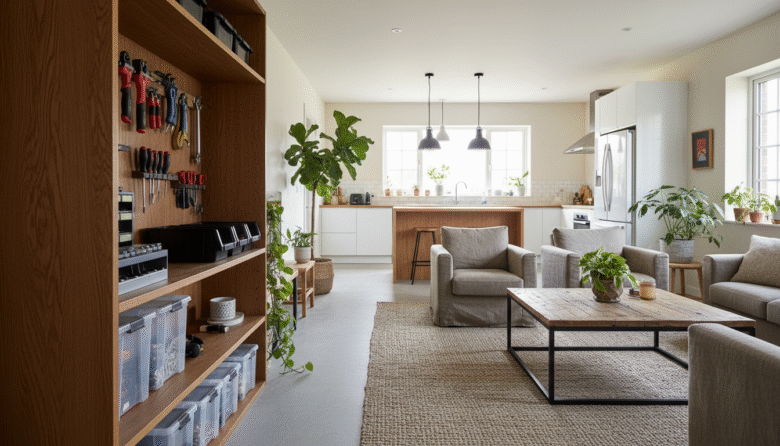
Open-concept layouts create wider turning spaces in key rooms. Eliminate steps between areas to ensure smooth movement. These changes support comfortable navigation throughout the residence.
Universal design modifications increase market appeal to multigenerational buyers. They create spaces that serve diverse needs while adding lasting value to your property.
Financing and Phased Renovation Strategies
Smart financial planning transforms ambitious accessibility projects into manageable investments. Many people feel overwhelmed by modification costs that range from $3,000 to $15,000, potentially reaching $50,000 for comprehensive upgrades.
Understanding available funding options reduces financial stress. Only 46% of homeowners feel prepared for necessary modifications.
Budgeting for Long-Term Upgrades and Exploring Assistance Options
Government grants and assistance programs provide valuable support for essential safety renovations. These programs often require no repayment, while some offer low-interest or forgivable loans.
Traditional financing includes home improvement loans based on credit and income. Home equity products provide alternative funding sources.
Home equity loans deliver lump sums with fixed repayment terms. HELOCs offer flexible borrowing during draw periods with variable rates. Reverse mortgages allow homeowners 62+ to access equity without monthly payments.
Home equity investments provide upfront cash for a share of future home value. These have no credit score requirements or monthly payments.
Phased renovation strategies make projects more affordable. Start with high-risk areas and complete other upgrades over time. This approach maintains functionality while spreading costs.
Enhancing Home Durability and Future Value
Durable modifications create living spaces that withstand daily use while maintaining their value over decades. These strategic enhancements appeal to buyers seeking residences requiring minimal upkeep.
Universal Design elements like wide corridors and zero-threshold entries increase marketability. They attract multigenerational families and people planning extended stays.
Balance functional needs with aesthetic appeal. Working with certified specialists ensures safety features integrate seamlessly into attractive designs. This approach prevents institutional appearances that diminish enjoyment.
Consider these return-on-investment comparisons for common projects:
- Accessible bathroom renovations deliver approximately 49% ROI
- First-floor master suite additions return only 24-36%
Quality flooring materials and low-maintenance finishes reduce ongoing upkeep. They provide safe surfaces that serve households effectively for many years.
These thoughtful changes create versatile properties accommodating life transitions. They make residences valuable to diverse buyer populations over time.
Navigating Project Challenges and Preparing for Change
Navigating accessibility upgrades demands a balanced approach that addresses immediate hazards while planning for future requirements. Many people face difficult decisions when adapting their living spaces for aging in place.
Full room remodels often prove unnecessary. Targeted changes can achieve accessibility goals more affordably. Converting a tub to a zero-entry shower with grab bars addresses key safety needs without complete reconstruction.
Prioritizing Safety Features and Creating a Renovation Timeline
Begin by identifying the highest-risk areas in your residence. Falls are common among older people, making flooring transitions and poor lighting critical hazards to address. Ensure level surfaces throughout high-traffic zones.
Making modifications while they’re optional provides control over design decisions. This prevents rushed choices during health crises. Consider how spaces might serve different future needs.
A den could become a first-floor bedroom during recovery. A playroom might transform into an exercise area. You may not anticipate all future uses, but flexible design supports changing mobility needs over time.
Develop a realistic timeline that prioritizes safety features first. Balance immediate concerns with long-term planning. This approach creates a residence that supports independent living through various life stages.
Building a Future-Proof Home with Lasting Value
Future-proofing your living space is an investment in lifelong independence and comfort. Small, thoughtful updates today prevent costly emergency changes later.
Including features like wider doorways or reinforced walls for grab bars during construction is far cheaper than retrofitting. This approach gives you control over design choices.
Early planning allows you to assess if your current house and neighborhood suit your long-term needs. It provides time to make informed decisions.
Consult a Certified Aging-in-Place Specialist (CAPS) for a professional assessment. Start with high-risk areas like bathrooms and stairways. Then, phase in other modifications as your budget allows.
These upgrades enhance safety and accessibility for all people, supporting a high quality of life for years to come.